

Artificial Intelligence (AI) may seem like a product of the modern digital age, but its roots trace back to some of the earliest human dreams. The journey from imagining sentient beings to actually building machines that simulate aspects of human intelligence is a remarkable story—a blend of philosophy, mathematics, engineering, and an enduring curiosity about what it means to “think.”
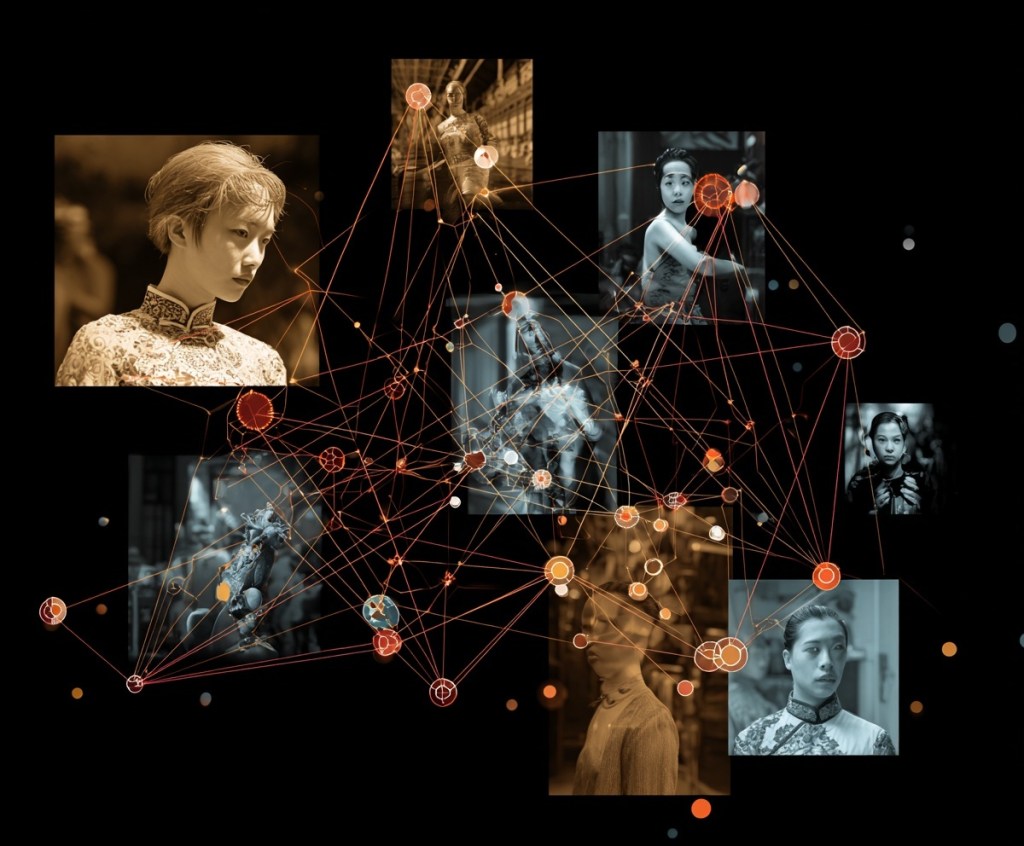
The idea of artificial beings appears as early as ancient mythology. Greek myths gave us Talos, a giant automaton made of bronze who guarded the island of Crete. In the Middle Ages, thinkers and inventors across cultures dabbled in building mechanical devices that mimicked life, such as Al-Jazari’s programmable humanoid robots in 13th-century Islamic engineering texts. These were not AI as we define it today, but they reflected a long-standing fascination with human-like intelligence outside the human form.
The conceptual groundwork for AI truly began to solidify in the 17th and 18th centuries, with philosophers like René Descartes and Gottfried Leibniz pondering whether human reasoning could be reduced to a set of formal rules. Leibniz’s dream of a universal symbolic language that could represent all logical thought foreshadowed the formal systems used in modern computing.
However, the modern history of AI begins in the 20th century. The invention of the digital computer in the 1940s, a machine based on formal mathematical logic, changed everything. Alan Turing, a British mathematician, became one of the first to propose the idea of a machine that could simulate any conceivable act of mathematical deduction. His 1950 paper “Computing Machinery and Intelligence” posed the provocative question: “Can machines think?” It also introduced the Turing Test as a way to evaluate a machine’s intelligence.

The field officially took shape in 1956 at a conference at Dartmouth College, organized by John McCarthy, Marvin Minsky, Nathaniel Rochester, and Claude Shannon. This event is widely considered the birth of AI as a formal academic discipline. McCarthy, who coined the term “artificial intelligence,” envisioned computers performing tasks that would require intelligence if done by humans. Early efforts focused on symbolic AI—using logic and rules to manipulate symbols to solve problems.
Through the 1960s and 1970s, AI research made significant strides. Programs could solve algebra problems, prove theorems, and even engage in rudimentary conversation. ELIZA, created in the mid-1960s, mimicked a Rogerian therapist and was one of the first chatbots, showing how simple rules could give the illusion of understanding.
Despite early excitement, limitations quickly became apparent. Symbolic systems struggled with real-world ambiguity and common sense. The 1970s and again in the late 1980s saw periods known as “AI winters,” where progress slowed, funding dried up, and public interest waned due to unmet expectations.
AI rebounded in the 1990s with advances in probabilistic reasoning, machine learning, and more powerful computing. In 1997, IBM’s Deep Blue defeated world chess champion Garry Kasparov, a symbolic milestone that brought AI back into the limelight. Yet Deep Blue was still a brute-force machine, not capable of learning or understanding as humans do.
The 2000s marked a turning point. With the rise of the internet, AI systems gained access to massive amounts of data. At the same time, improvements in algorithms and hardware made training complex models feasible. Machine learning—particularly deep learning—emerged as the dominant paradigm. Instead of writing rules, researchers trained systems on data. This shift culminated in 2012, when a deep neural network developed by researchers at the University of Toronto crushed the competition in the ImageNet visual recognition challenge.
From there, the progress became exponential. Voice assistants like Siri and Alexa became household names. AI models could translate languages, generate images, and even compose music. In 2016, Google DeepMind’s AlphaGo defeated the world champion of Go, a game previously thought too complex for machines. Today, generative models like GPT and DALL·E show AI’s capacity not just for understanding but for creative expression.

As we stand in 2025, AI is no longer confined to research labs. It’s embedded in healthcare, finance, art, transportation, and even scientific discovery. And yet, the core questions remain: What is intelligence? Can machines truly understand? Should they?
The history of AI is not just a technological tale—it’s a human story. A story of our hopes, fears, and ambitions, embodied in the machines we create. And it’s a story still very much in progress.
 ARTIFATHOM labs
Leave a comment